
 Honorary Programs
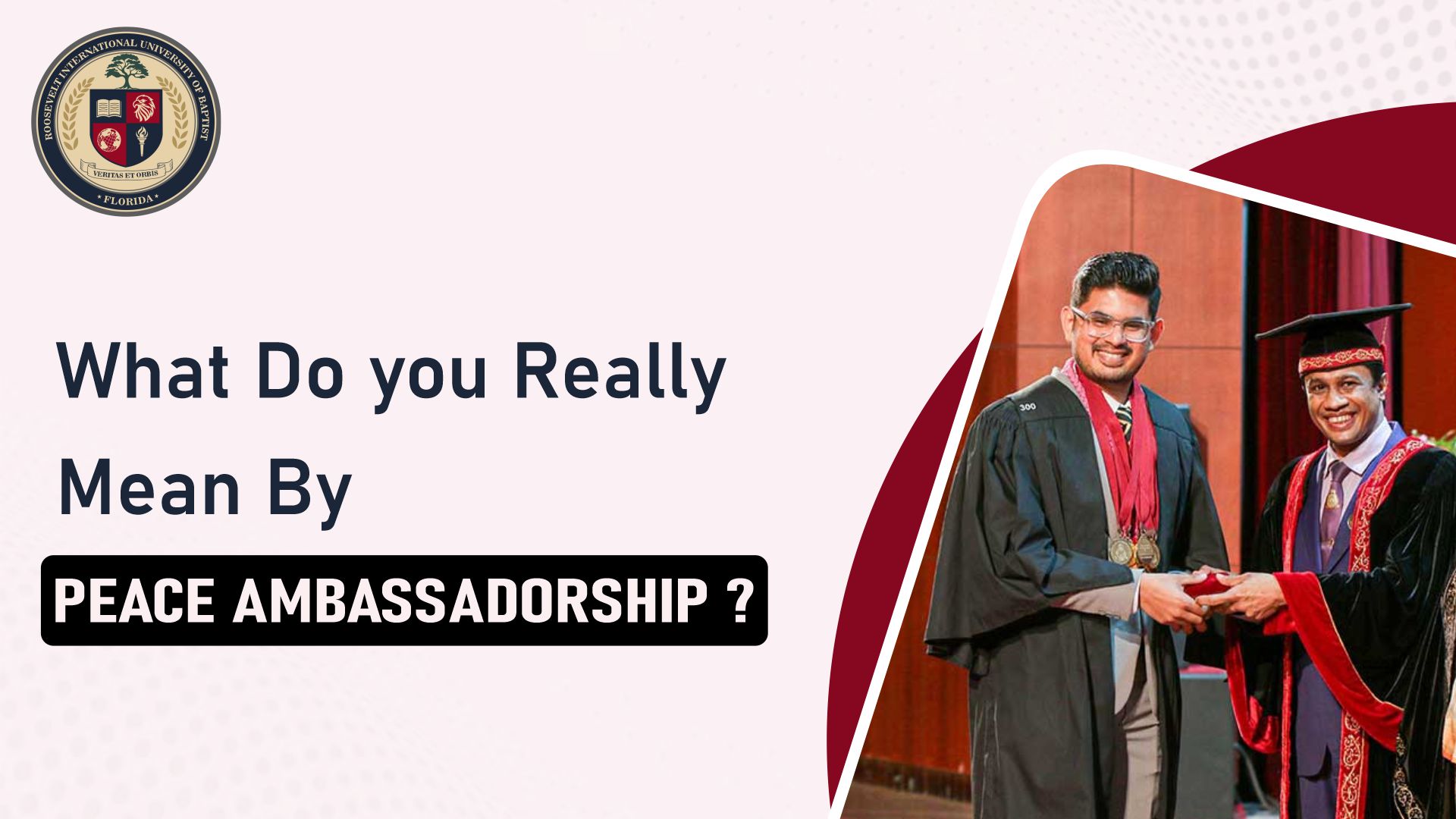
Peace ambassadorship sounds familiar now, yet its meaning stays unclear. Across campuses, conferences, and professional bios, the phrase turns up often. Global tensions, uneven opportunities, because of differences in background keep testing cooperation. Recognition matters, still - does the label stand for action or just image? Sometimes it names a role with duties. Other times, it floats without weight. Meaning shifts depending on who uses it, where it shows. Not every mention points to real engagement.
This blog cuts through the clutter. What peace ambassadorship actually means becomes clear, along with its ties to leadership - how one informs the other. Its place within today’s educational structures emerges, even alongside systems such as the Roosevelt International Academic Calendar. Practical worth comes into view when weighed against real-world pressures, including burdens like student loan debt.
Peace Ambassadorship What It Means Without The Label
Peace ambassadorship, at heart, isn’t about holding a diploma or being named by a state. Instead, it emerges when people show - sometimes even just promise - a dedication to:
- Conflict resolution
- Social harmony
- Cross-cultural collaboration
- Humanitarian values
Yet actual usage shifts noticeably based on which organization issues it.
The Reality Check
Looking at it professionally, peace ambassador roles fit within one of three types:
Honorary Recognition
Awarded based on past contributions or perceived influence.
Program-Based Role
Engagement often stems from active involvement in training sessions, professional gatherings, or organizational efforts.
Advocacy Position
Individuals actively engage in campaigns, awareness drives, or community work.
Before placing any real-world worth on an ambassadorship, one must first figure out its category. Not every role fits the same mold, so identifying where it belongs comes prior to valuation.
The Leadership Dimension What It Really Affects
Claiming peace ambassador status sometimes functions like a leadership badge - though its value shifts depending on setting. Not every context treats it the same way.
Leading by Doing Not Position
True leadership within peace ambassadorship is demonstrated through:
- Mediating disputes in community settings
- Organizing social impact initiatives
- Advocating for inclusivity in institutional environments
- Driving awareness campaigns on global issues
Take a typical campus setting. There, learners chosen as peace envoys frequently facilitate cross-cultural conversations instead of simply attending them. Such activities show real initiative - far beyond symbolic titles. Leadership here takes shape through action, not position.
Case Insight Campus Level Impact
Peace ambassador positions appear across schools using organized schedules such as the Roosevelt International Academic Calendar. Within these settings, learners take on responsibilities tied to extracurricular programs. Participation often begins during scheduled terms when student involvement is highest. Assignments may include dialogue facilitation or community engagement tasks. These duties unfold alongside regular coursework rather than replacing it. Roles tend to emphasize collaboration over competition among peers. Engagement grows through consistent interaction with diverse groups. Responsibilities shift slightly depending on institutional priorities each semester
- Conducting peer engagement programs
- Leading diversity and inclusion committees
- Participating in international exchange discussions
A shift happens when leadership becomes something you see in action, not just a title on paper. What counts is what people do, not what they're called.
Peace Ambassadorship in Academic Settings
Though classrooms stay traditional, some now include hands-on experience alongside theory. Within such setups, roles like peace ambassador start showing up more frequently.
Structured Academic Ecosystems
Institutions Using Structured Frameworks Like the Roosevelt International Academic Calendar
- Academic coursework
- Leadership development
- Global exposure
In these setups, serving as a peace envoy could appear like this:
- A co-curricular credential
- Awarded due to involvement in worldwide programs
- A supplement to formal education
Still, one key point stands out:
It does not replace academic qualifications . Most of the time, it lacks recognized academic credit
The Financial Side Does It Add Up?
Thinking clearly matters most at this point.
Some learners now enter college already carrying debt from tuition financing. Under these conditions, each qualification deserves scrutiny based on long-term value rather than assumed worth.
What To Wonder
Peace ambassadorship might shape skills useful in jobs - yet clear links to higher pay remain uncertain.
Honest Answer
Direct impact: Limited
Indirect impact: Moderate (if leveraged correctly)
Peace ambassadorship can support:
- Personal branding
- Social credibility
- Networking opportunities
- Yet it fails to do so
- Replace a degree
- Increase salary benchmarks independently
Practical Example
A person studying for an MBA, yet handling debt from school, could find greater advantage in:
- Industry internships
- Skill certifications
- Technical competencies
A different role might carry more weight than peace envoy when it comes to core credentials. Still, serving in such a capacity can add subtle value alongside stronger qualifications.
Real World Value When It Works
Only when peace efforts meet actual deeds does their worth appear clearly. What counts is movement beyond words - silent steps matter more than loud promises.
NGO and Social Sector Example
Individuals working in:
- Non-profits
- International development
- Community outreach
can leverage peace ambassadorship as:
- Proof of commitment
- A credibility marker
- Academic and Research Careers Scenario Two
Students engaged in:
- International relations
- Sociology
- Public policy
could apply it for:
- Support research interests
- Build global exposure narratives
- Personal Branding Example Three
- In the age of digital presence, peace ambassadorship can:
- Strengthen LinkedIn positioning
- Support speaking opportunities
- Enhance thought leadership
Yet effectiveness depends on clear results and observable effort.
Common Misconceptions To Avoid
1. “It’s Equivalent to a Degree”
Recognition defines peace ambassadorship, not academic credentials. Still, many assume otherwise.
2. “It Guarantees Career Growth”
Outcomes aren’t assured - even when it plays a role.
3. “It Holds Universal Value”
Some fields accept it widely; others remain hesitant. Location often shapes how it is received.
4. “It Replaces Leadership Experience”
True leadership shows through actual effort put forward.
Using Peace Ambassador Roles in Practical Ways
Should peace ambassadorship be part of your current role - or something on your mind - consider this perspective. Ways to draw more benefit emerge when approach shifts slightly. Focus adjusts naturally once small changes take root. Value grows not through effort alone, but by redefining what matters most
1. Turn Title Into Action
- Lead initiatives
- Document impact
- Showcase measurable outcomes
2. Connect to Academic Path
Following frameworks such as the Roosevelt International Academic Calendar helps show growth across multiple areas. One way to reflect broad progress is by matching activities to organized academic timelines. These kinds of systems allow learners to track advancement beyond test scores alone. Matching efforts with set schedules can reveal strengths in different domains. Progress becomes clearer when experiences fit within known educational models.
3. Build a Narrative
Instead of listing the title:
- Describe the actions taken
- Highlight results
- Show leadership impact
4. Combine With Core Skills
Pair it with:
- Technical expertise
- Industry certifications
- Academic achievements
5. Stay Financially Practical
If you are managing student loans, prioritize:
- High-impact qualifications
- Career-aligned investments
Peace ambassadorship works best when seen as a tool, rather than an expense. Rather than drain resources, it shifts how efforts are focused. Seen through strategy, its value grows without added cost. Instead of weighing budgets down, it opens quieter paths forward.
The Bigger Picture Still Matters
Even with flaws, being a peace ambassador touches on what matters most: how leaders connect with people.
Where numbers shape decisions, one finds soft traits often overlooked. Yet empathy matters just as much as efficiency. Though speed grabs attention, patience builds trust over time. Because results dominate reports, kindness slips under review. When targets rule days, listening fades from priority. Even so, respect influences outcomes quietly. While systems push output, care supports lasting success behind scenes
- Empathy
- Cultural intelligence
- Ethical leadership
- hold growing importance.
True peace ambassadorship builds such qualities naturally. What matters most is genuine effort behind every gesture.
Final Thoughts: Title vs. Impact
What exactly stands behind the idea of being a peace ambassador?
Success does not come faster because of it, any more than it takes the place of schooling. A tool, really - something capable of staying empty in meaning or growing into real leadership practice.
Execution makes the distinction.
Its worth drops sharply when labeled merely a title.
When seen as an obligation, it turns into something strong - shaping trust, impact, or progress in quiet but steady ways.
When education shifts toward broader goals, awards tied to growth matter more - yet they mean little without follow-through. With models such as the Roosevelt International Academic Calendar emphasizing balance, value emerges not just in earning honors but in using them. Where effort meets opportunity, acknowledgment gains purpose. Without motion behind it, even the strongest credential fades. Progress favors those who move beyond praise and build on it.
Frequently Asked Questions
1. What is peace ambassadorship in simple terms?
A title given for efforts in fostering unity, peace ambassadorship honors those advancing cooperation instead of war. Though lacking official government authority, it offers visibility to champions of dialogue and understanding across divides. Recognition comes through actions supporting justice, empathy among communities follows. Leadership shows up not in rank, but in consistent support for reconciliation work.
2. Is peace ambassadorship a degree or academic qualification?
Peace ambassadorship isn’t a substitute for degrees like an MBA or MSc. Instead of counting toward official qualifications, it sometimes appears alongside studies in places following systems such as the Roosevelt International Academic Calendar. Though recognized in certain settings, it lacks standard credit value. Not every educational path treats it the same way - some view it as supplementary only.
3. Who can become a peace ambassador?
Not every group sets the same rules - most agree on basic conditions, though. What works for one might not fit another’s criteria at all. Still, common patterns emerge if you look closely enough
- Students
- Professionals
- Social workers
- Community leaders
One factor that might play a role is an applicant's focus on community benefit. Decisions frequently hinge on demonstrated initiative, though past involvement sometimes carries weight instead.
4. Does peace ambassadorship help in career growth?
It can support career growth indirectly by:
- Enhancing your profile
- Demonstrating leadership involvement
- Building networking opportunities
Still, landing a job or moving up isn’t automatic. What matters is how well you turn that credential into tangible results.
5. Peace ambassadorship does worldwide acknowledgment exist? Global acceptance remains uncertain.
What counts often comes down to who gives the credential. Certain courses show up clearly beyond borders, yet a few stay confined within narrow circles. Before starting one, check how well the body behind it is seen by others.
6. Can peace ambassadorship replace work experience?
True expertise doesn’t come from titles like peace ambassador. Such roles may add depth, yet hiring decisions lean on proven skills. Experience matters more than symbolic positions. What counts is track record, not recognition alone. Credentials help - when backed by real work. Standing out means showing competence, not just participation
- Practical skills
- Industry experience
- Measurable achievements
7. Is it worth pursuing if I already have student loans?
When handling student debt, think twice about peace ambassador roles. These opportunities work better as affordable honors - or extras - rather than central career moves. Focus shifts toward credentials that boost job prospects and earning power. What matters most often lies outside symbolic titles.
8. What kind of activities do peace ambassadors typically do?
Activities may include:
- Organizing awareness campaigns
- Participating in community outreach
- Promoting cultural exchange
- Leading student or social initiatives
Depending on the program, duties can differ quite a lot.
9. How can I add peace ambassadorship to my CV effectively?
Apart from stating the name, add:
- Specific initiatives you led
- Outcomes or impact achieved
- Skills demonstrated (e.g., leadership, communication)
Because it builds trust, this method strengthens outcomes through clearer validation. Success comes not just from claims, but from measurable performance backed by consistent logic.
10. How is peace ambassadorship linked to leadership?
Leading efforts in peace often means guiding others through tough community challenges. Such roles highlight how one steps up when help is needed most. Guidance emerges not from titles, but from action during hardship. Moments of crisis reveal who listens closely, speaks thoughtfully. Helping others find common ground becomes a quiet form of strength. Influence grows where empathy meets consistency. What matters most is showing up, again and again
- Influence communities
- Drive initiatives
- Promote collaboration
True influence within such roles emerges only when effort follows responsibility, not simply because a name appears above a position. Strength grows through what you do, far more than what you’re called.
11. Could things go wrong? What might not work out as expected?
True, there are possible issues to consider
- Putting too much weight on a name, despite little actual effect
- Choosing programs with low credibility
- Spending money without clear returns
A method built on real testing sidesteps such problems rooted in observed results rather than theory alone.
12. Can peace ambassadorship be part of academic programs?
True, within certain frameworks - such as institutions following the Roosevelt International Academic Calendar - it might appear as part of leadership acknowledgment or alongside curricula. Still, its role stays secondary, falling outside required coursework.